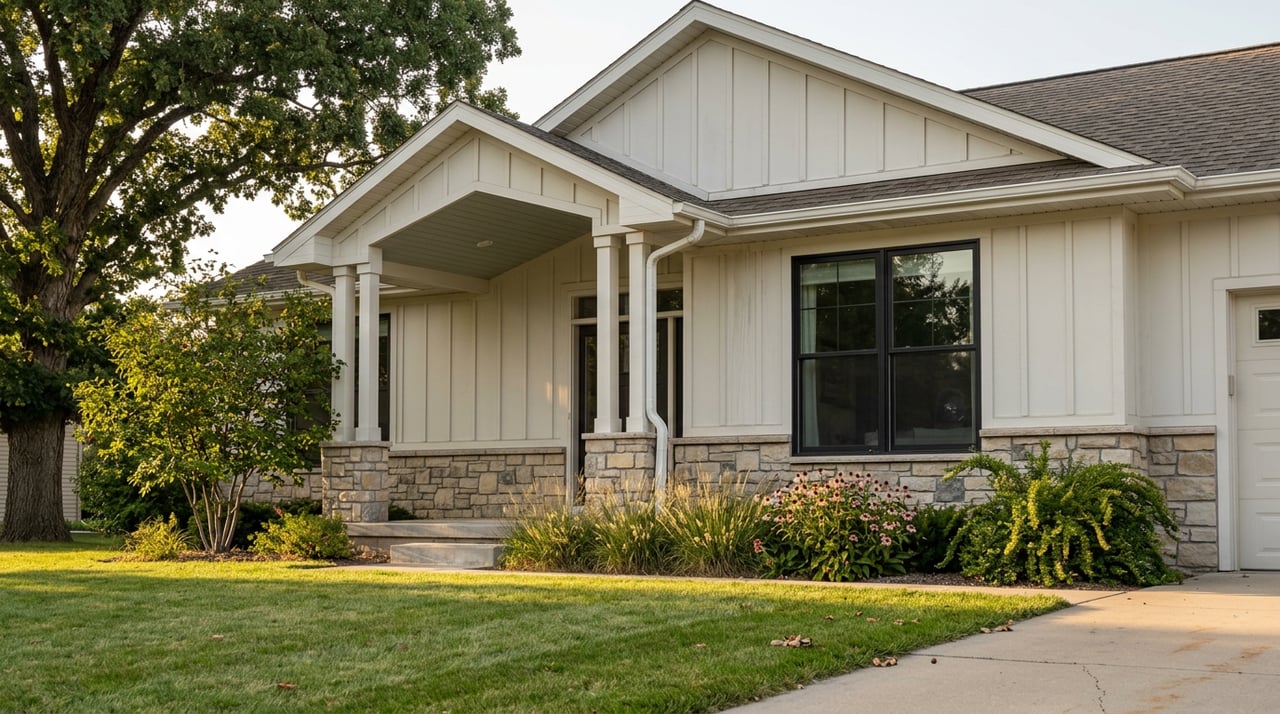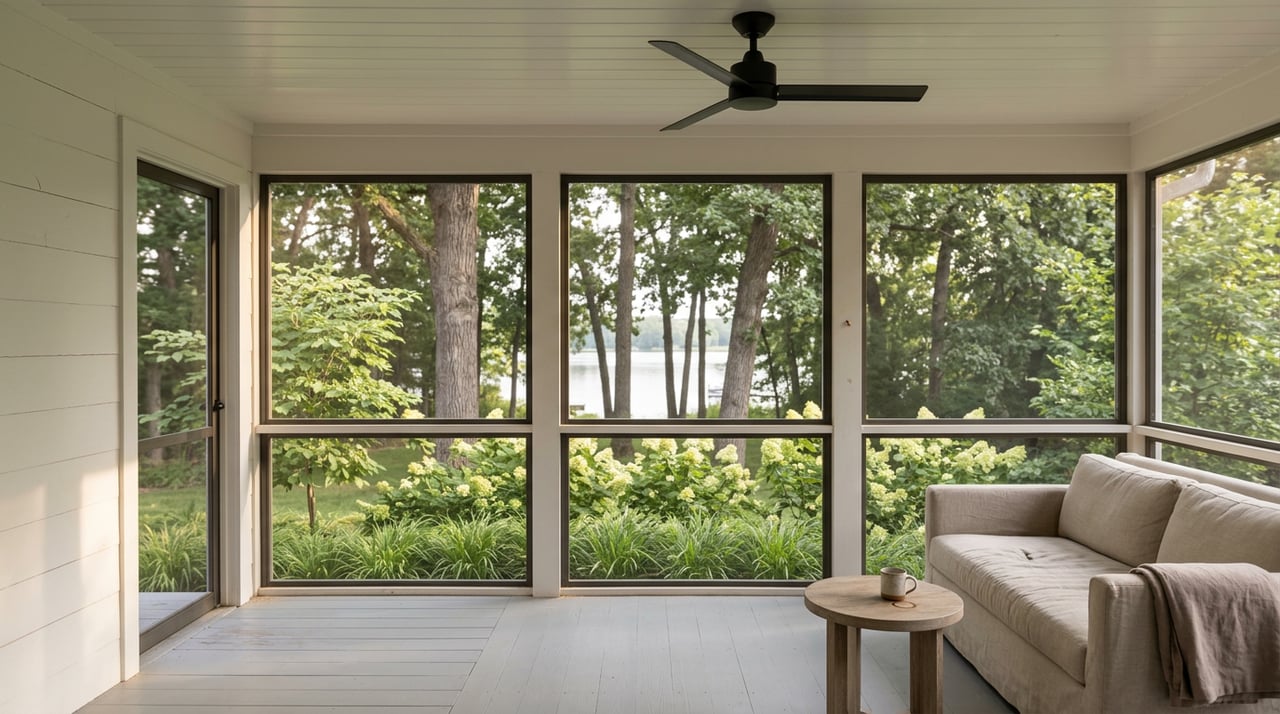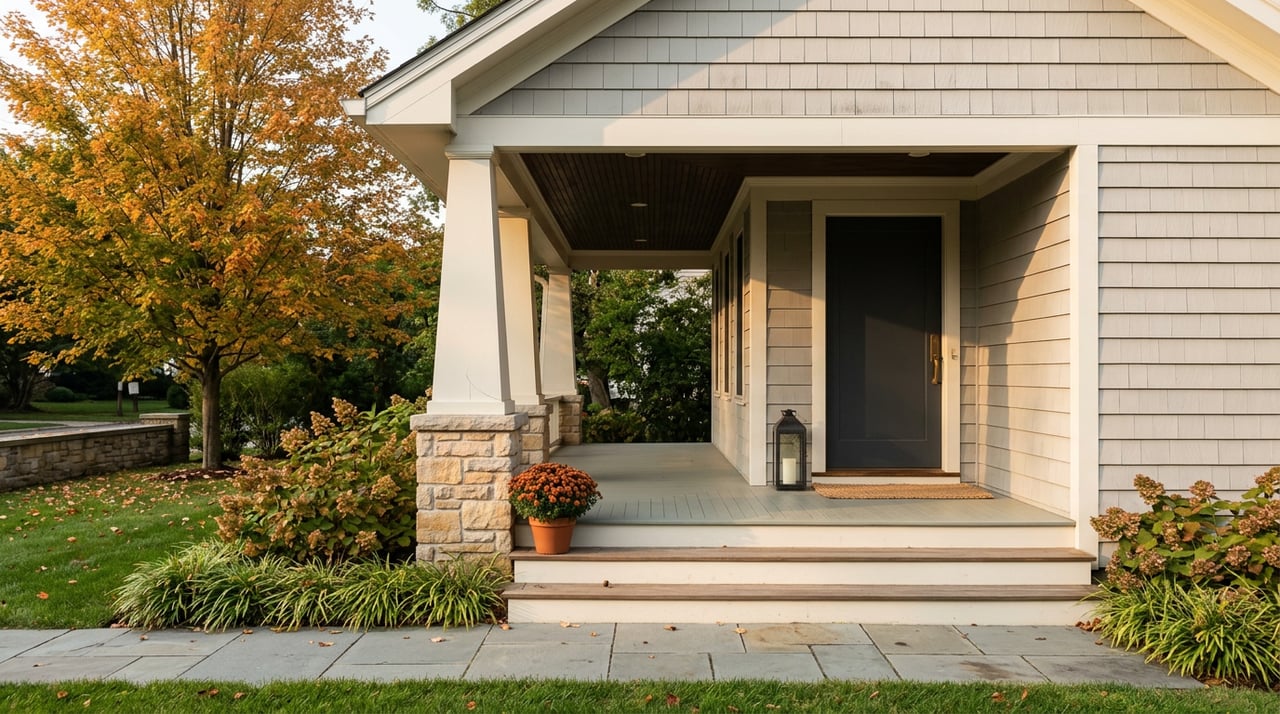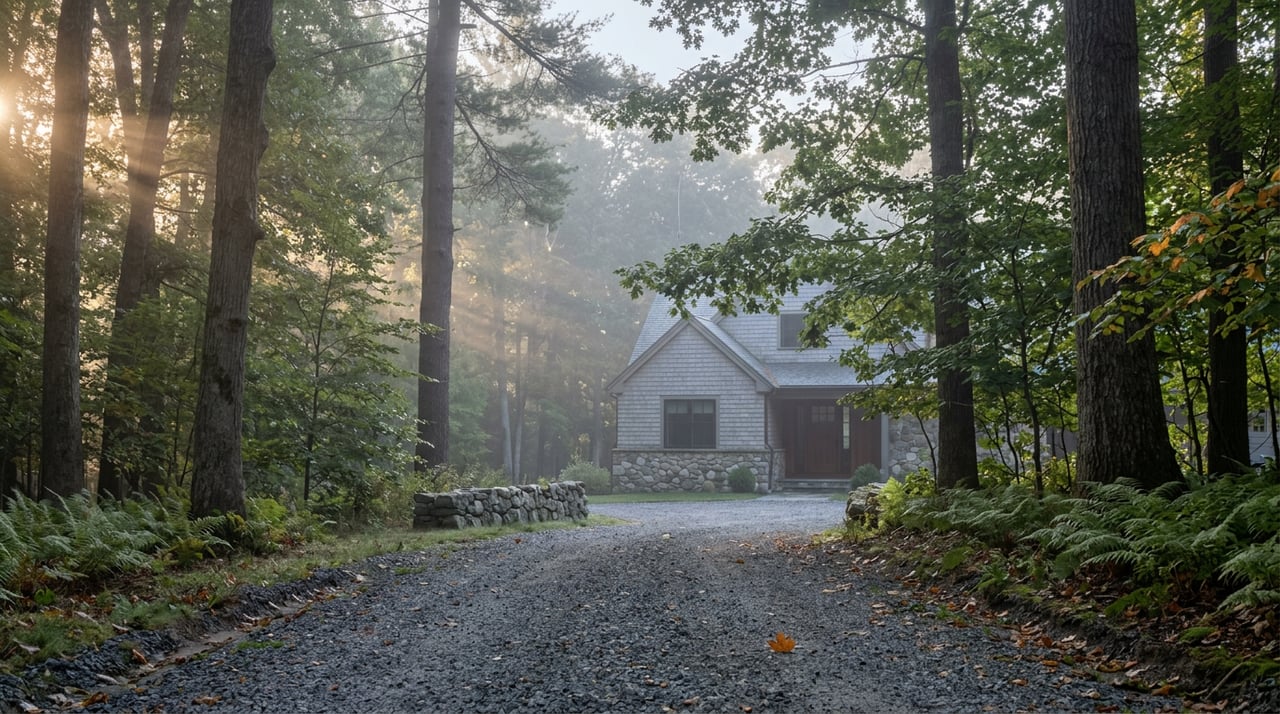
On January 30, 2026, a house on Muscovy Road in Chenequa sold for $1,285,000. It has three bedrooms, two bathrooms, and 1,251 square feet. That is smaller than a lot of starter homes in Watertown or Ixonia, and it sold for more than triple what most move-up buyers in southeast Wisconsin spend on a home twice its size.
Six months earlier, a 7,215-square-foot house on Highway 83, with six bedrooms and three and a half bathrooms, sold for $1,200,000. Less money for five times the square footage.
If you are comparing Chenequa to other Lake Country towns and trying to figure out what your money buys here, this is the fact to sit with. The house is not the product. The land under it is, and the Village of Chenequa has spent nearly a century making sure there is very little of it to go around.
The math that shouldn't work
Here is what four recent Chenequa sales actually looked like, pulled from closed transactions between 2024 and early 2026:
| Address | Sold Date | Sale Price | Sq. Ft. | Acreage | Price per Sq. Ft. |
|---|---|---|---|---|---|
| 31562 W Muscovy Rd | 01/30/2026 | $1,285,000 | 1,251 | 1.5 | $1,027 |
| 5166 Highway 83 | 03/20/2025 | $1,550,000 | 6,012 | 2.0 | $258 |
| 5400 Highway 83 | 07/07/2025 | $1,200,000 | 7,215 | 2.0 | $166 |
| 6201 N Woodside Dr | 08/12/2024 | $1,260,000 | 5,320 | 5.1 | $237 |
In most Waukesha County markets, price per square foot is a decent shorthand for value. Here it swings from $166 to over $1,000 within the same eighteen months, on homes that sold within $350,000 of each other. If you tried to comp these the way you'd comp four houses in Hartland or Oconomowoc, using square footage and finish level as your anchor, you would conclude the market is broken. It isn't broken. It's pricing something else entirely.
A village built in 1928 to stay small
Chenequa was not always its own village. It was carved out of the Town of Merton in 1928 by a group of wealthy Milwaukee families who had built summer homes around Pine Lake and wanted their own police protection. The Town of Merton objected, worried about the tax revenue it would lose, and took the matter to court along with hundreds of local residents who signed petitions against the split. In January 1928, a judge ruled the incorporation could proceed, dismissing the argument that it would cut off public access to the lake by noting that the lake already had public roads and three hotels welcoming visitors.
That founding decision set the tone for everything that followed. Land use planning has been a stated goal of the village since incorporation, and the zoning code still in effect today requires a minimum of five acres for any non-lake lot, and between two and four and a half acres for lake lots depending on frontage. The village's own history page quotes the current code directly: the village is intended to be devoted solely to residence purposes, so as to afford its citizens a degree of quiet unavailable in a city. There is no commercial district. No retail corridor. No path to more density without rewriting a rule that has held for close to a hundred years.
That is the mechanism behind the price. Every home that comes up for sale sits on a fixed, small, legally protected footprint of land, and the number of parcels that will ever exist around Pine, Beaver, and North Lakes is essentially capped by ordinance, not by how much anyone wants to build.
Why the "average price" number barely means anything here
If you search for Chenequa's average home price, you'll get wildly different answers depending on where you look, and that inconsistency is itself a clue. One widely used home-value estimator put Chenequa's average at $2,192,234 as of June 2026, while other market summaries have cited figures closer to $947,850. Compare that spread to the same June 2026 tracker's numbers for neighboring towns: Hartland at $410,051, Oconomowoc at $425,157, Pewaukee at $438,877, Delafield at $614,198, and Merton at $586,810.
Those neighboring numbers cluster fairly tightly. Chenequa's estimates don't, because Chenequa doesn't sell enough homes in a given year for an average to settle down. When one $5 million estate and one $700,000 cottage on a small legal lot both close in the same quarter, the average lurches. As of June 2026, the same tracker showed exactly one active listing in the entire village. When your total inventory is one house, there is no meaningful "market rate," only whatever price the specific buyer and seller agree to for that specific parcel.
This is the part that gets lost when people compare Chenequa to Delafield or Oconomowoc using a single headline number. The gap between Chenequa and its next most expensive neighbor isn't a story about a nicer lake or better schools. Homes here draw from the Arrowhead Union High School district, same as several surrounding communities. The gap is a story about legal scarcity that was engineered on purpose and is still enforced today.
The lake is managed with the same intent
Pine Lake itself follows the same logic. The village's own description puts it at 703 acres, and it sits entirely inside village limits along with parts of Beaver Lake and North Lake. There is exactly one public boat launch on Pine Lake, open from 6 a.m. to 10 p.m. most of the year and extending to 4 a.m. until midnight on the general fishing opener weekend, with parking limited by design rather than oversight. Beaver Lake frontage is mostly held privately, and North Lake has no public boat access at all.
The village keeps actively legislating around this scarcity rather than letting it sit static. In June 2025, the Village Board adopted an ordinance creating a narrow exception for modifying legal nonconforming structures inside the shoreline buffer zone, but only if the change does not increase the structure's footprint, living area, or height. A pierhead line ordinance for Pine Lake, regulating where piers and wharves can extend into the water, was amended in September 2024, and the village's posted update at the time noted it was still awaiting Wisconsin DNR review. The Lake Management Committee has also circulated proposed voluntary wakeboating guidelines for Pine Lake, covering everything from staying in water deeper than 20 feet to keeping wakes away from piers. None of this is cosmetic. It is a village continuing to write and rewrite rules that keep growth, density, and lake traffic contained the way its founders intended in 1928.
What this means if you're actually comparing towns
If Chenequa is on your list alongside Hartland, Oconomowoc, or Delafield, a few things are worth knowing before you start touring:
Comparable sales analysis works differently here. An appraiser or agent pulling comps in Chenequa has to weight acreage and lot type over square footage and finish level, because the data above shows finish level barely correlates with price. A buyer who assumes a bigger, nicer house should cost more within the village may be surprised by what actually closes.
Renovation and construction carry more friction than in an unincorporated town. The village enforces specific standards even for things like private driveway design, and one 2023 legal notice shows a property owner needing a formal resolution because a driveway did not meet the design standards set out in the village code. If you're the kind of buyer who wants to update or expand a lakefront home, the 2025 shoreline buffer ordinance means any nonconforming structure near the water can only be modified within its existing footprint, not expanded.
Inventory will almost never look like a normal market. With only a handful of closed sales in a typical year and, at times, a single active listing villagewide, patience matters more here than almost anywhere else in the Lake Country corridor. The right property may take a season or more to appear, and when it does, it will likely be priced on its acreage and its position on Pine, Beaver, or North Lake, not on a spreadsheet of recent comps.
A few common questions
Can I still buy vacant land and build in Chenequa? Yes, but any new construction has to meet the same minimums that apply to existing lots, five acres for non-lake parcels and two to four and a half acres for lake lots depending on frontage, so vacant land here tends to be priced closer to what an eventual buildable estate would fetch than what raw acreage costs elsewhere in Waukesha County.
Are there any businesses at all inside the village? The zoning code is explicit that the village is meant to be residential only, and there is no retail or commercial district within Chenequa's boundaries. Residents typically drive a short distance to Hartland or Delafield for shopping and dining.
What school district serves Chenequa? Homes in the village generally fall within the Arrowhead Union High School district.
If you are weighing Chenequa against Hartland, Oconomowoc, or another Lake Country town and want to understand what a specific property is actually pricing in, whether that's acreage, lake frontage, or a piece of a shrinking legal category, I'd rather walk through the real numbers with you than hand you a portal search. At Premier Choice Realty, that kind of practical, land-first read on a listing is where we spend most of our time. Let's Connect, and we can look at what's actually available before you spend a season chasing a market that doesn't behave like its neighbors.